Car will not start - what to check first
When a car will not start, a short list of checks sorts a dead battery from a dead starter. Most of the time the car is fine and it needs a boost, a fuse, or a key the car can recognize.
What you'll learn
- The difference between dead-battery symptoms and starter symptoms
- Why a clicking noise usually means battery, not starter
- Why a shifter that is not fully in Park stops the start, and what to try
- Why transponder keys fail and what to try first
Step by step
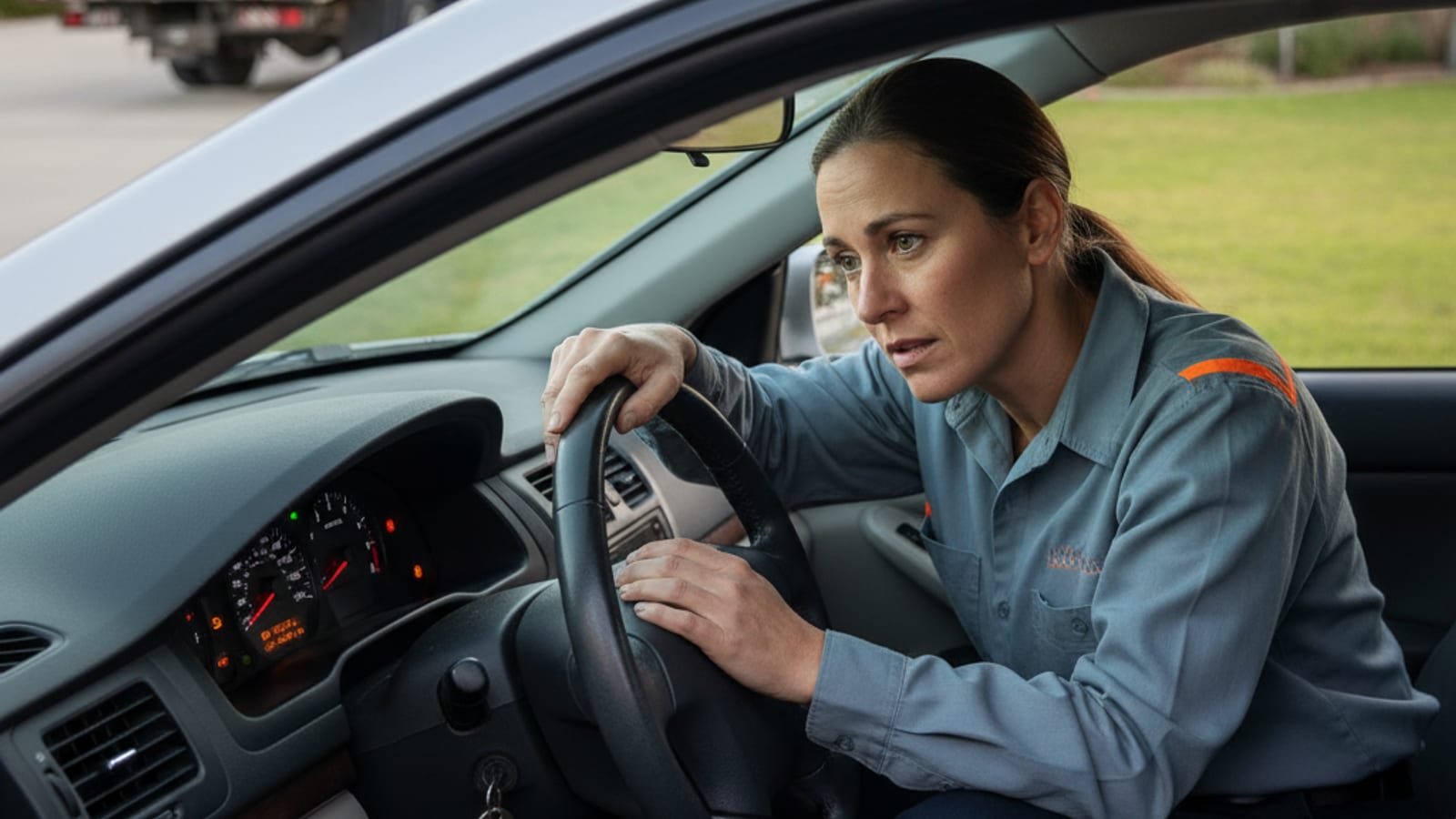
- Check the dashboard. Do any lights come on when you turn the key to ON?
- Try turning the key (or pushing start) with the brake held firmly.
- If you hear rapid clicking, the battery is low. Try a jump.
- If you hear one click or silence, the starter or ignition may be bad.
- Check that the key fob has battery (swap with a spare if you have one).
- If the transmission is not fully in Park, move the shifter and try again.
If you have run through the list and the car still will not start, you need a tow. The operator who arrives can often check the obvious causes on the scene before deciding to load it.
Car will not start: what each symptom usually means
- Nothing happens and no dash lights appear: The usual causes are a discharged battery, a loose battery connection, or a main electrical fault. If a boost or corrected connection restores normal starting, the car may be driven away. If it stays completely dead, it needs a tow.
- Rapid clicking: This usually points to a weak battery or poor battery connection. A successful boost may get the car moving. Follow the safe jump-start guide rather than guessing at the cable order. If it still clicks, arrange a tow.
- One solid click: The battery may have power, but the starter may not be turning the engine. A failed starter generally means the car must go to a repair shop.
- The engine cranks but never catches: The starter is turning the engine, but fuel, ignition, or security-system trouble may be preventing it from running. Repeated attempts won't settle the cause. Plan on a tow if it doesn't start.
- It starts, then dies within a minute: A charging, fuel-system, electrical, or security-system problem may be involved. Don't count on the car staying running in traffic. It should be diagnosed before being driven away.
- It starts only in Neutral: That usually points to a problem in the system that recognizes the transmission's position. Even if the engine starts, the fault needs shop diagnosis. Don't keep relying on Neutral as a workaround.
Why San Antonio no-start calls arrive in clusters
San Antonio heat can weaken a battery through the summer. The failure may not show until the first cold morning demands more from it. Local highs rise above 100F. In 2023, the city reached 105F with a 116F heat index. San Antonio's all-time high was 111F in 2000.
A hard freeze can finish batteries that were already weak. During February 2021, San Antonio stayed below 32F for 107 straight hours, with around 700 accidents reported. Those temperature swings help explain why many drivers discover the same problem during the same weeks.
Where the car stopped changes the urgency
A Loop 1604 or US-281 shoulder isn't a safe place for extended troubleshooting. If the car is in or beside an active lane, tell dispatch immediately. A licensed local operator can assess the situation and determine how to move it safely.
A dead car in an apartment lot or marked private lot brings a different concern. San Antonio City Code 19-391 requires at least one sign at each driveway or curb-cut entrance. Restricted areas must be marked at intervals no greater than 50 feet. Dumpster access must display "NO PARKING-TOW AWAY ZONE" in contrasting letters at least three inches tall. Texas law also bars an apartment complex from towing a vehicle merely for expired registration or inspection.
Time matters on government and military property too. On a JBSA installation, a vehicle left for three days may be impounded by Security Forces. Under Texas Transportation Code Chapter 683, a vehicle is generally abandoned after 48 hours when left illegally on public property or on private property without consent.
What an on-scene diagnosis can settle
A quick check can sometimes end the call. A boost, a replacement fuse, or a corrected battery connection may restore normal starting. The operator can then tell whether the car appears ready to leave or still needs shop attention.
Some failures can't be repaired where the car sits. A failed starter, seized engine, fuel-system failure, or security-system lockout requires deeper diagnosis. In those cases, the practical next step is a tow to a repair shop.
What to tell dispatch
Give the exact location, what happens when you turn the key, and whether the car is in a lane, lot, or driveway. Also provide the destination. Quick Tow San Antonio dispatches a licensed local operator, and that operator quotes the job.
Rather have a pro handle it?
24/7 towing and roadside across the San Antonio metro, handled by licensed local operators.
Keep learning.
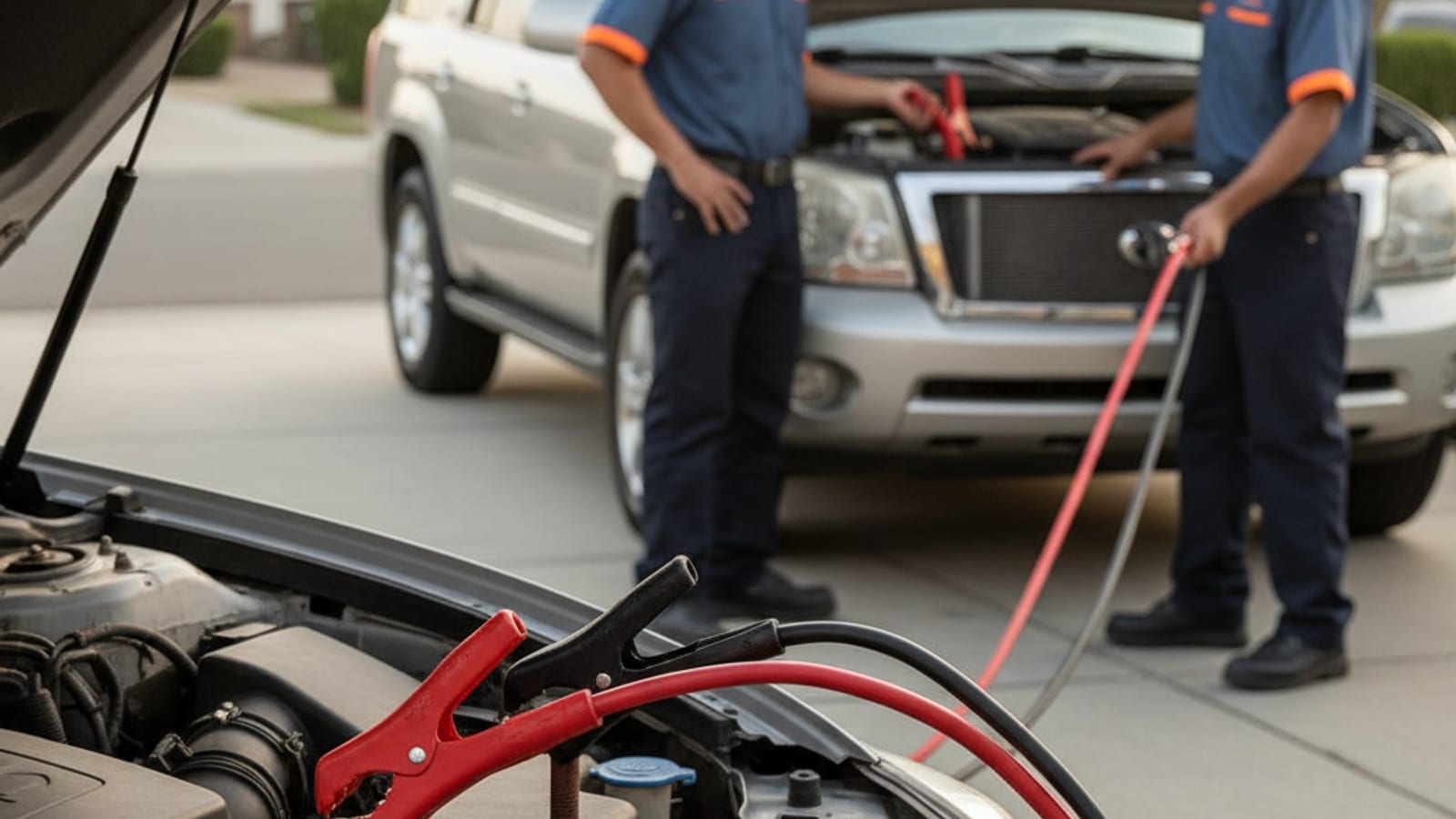
Jump-start a dead battery safely
Jumper cables are simple until you hook them wrong. Do it right and you'll avoid sparks, ruined electronics, and a tow you didn't need.
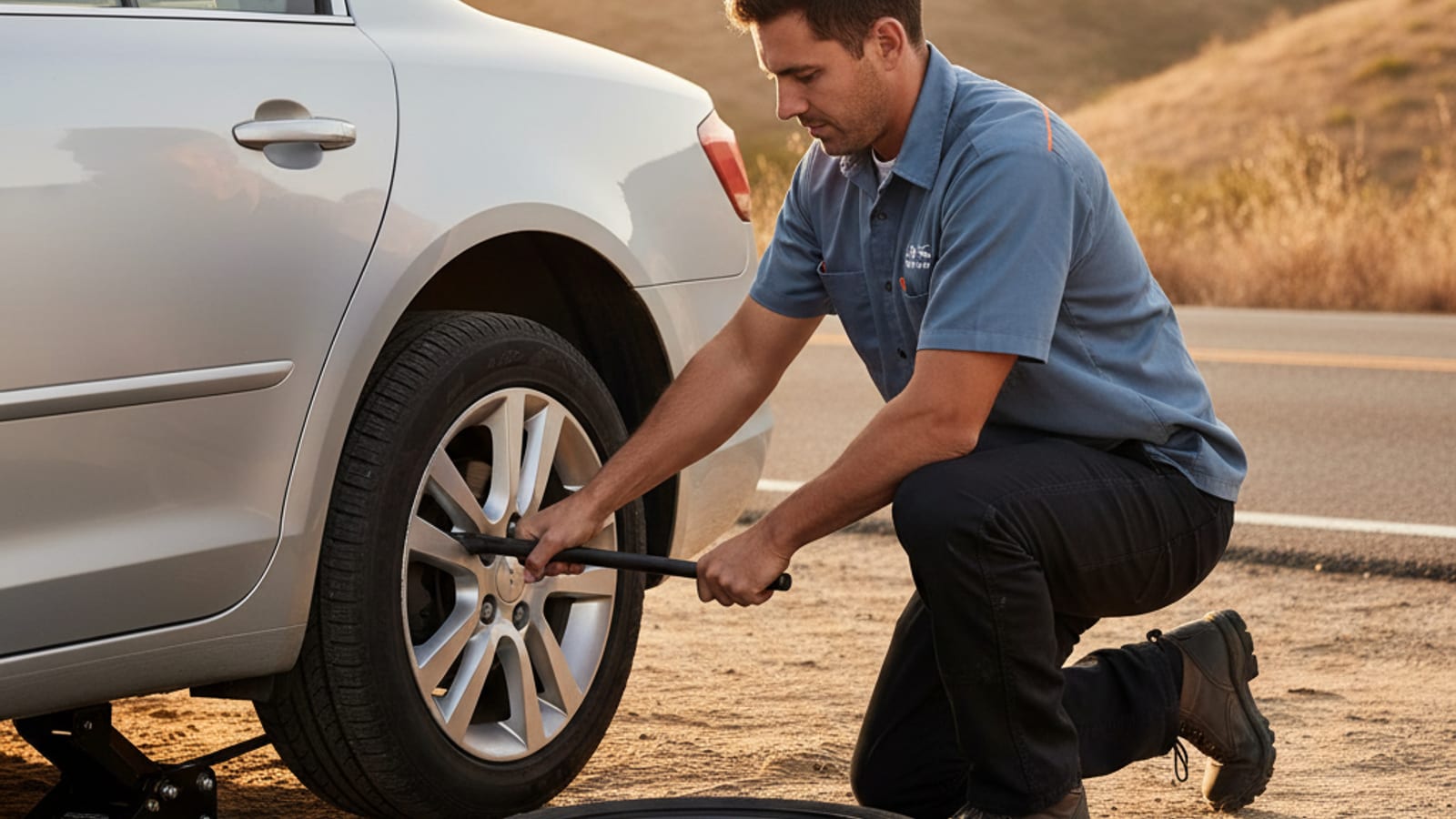
Change a flat tire on the side of the road
The difference between a 20-minute shoulder stop and an hour on the phone with a tow company is knowing where the spare and jack live before you need them.
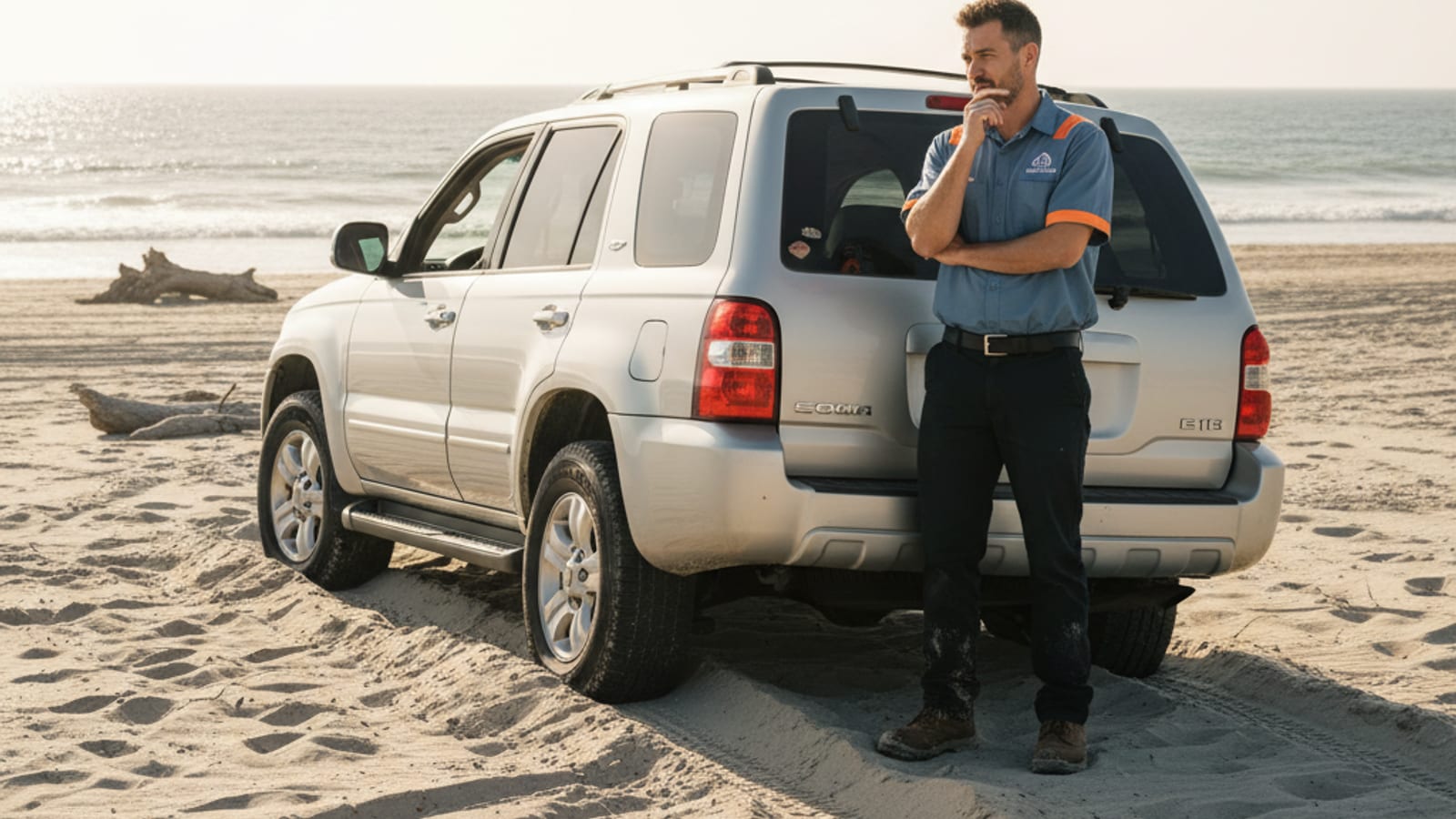
What to do when stuck in sand or mud
Stuck in sand or mud, the first move is to stop spinning the wheels, because every try after that digs the car deeper. San Antonio adds a second rule: if there is water across the road, nobody tries at all.