Jump-start a dead battery safely
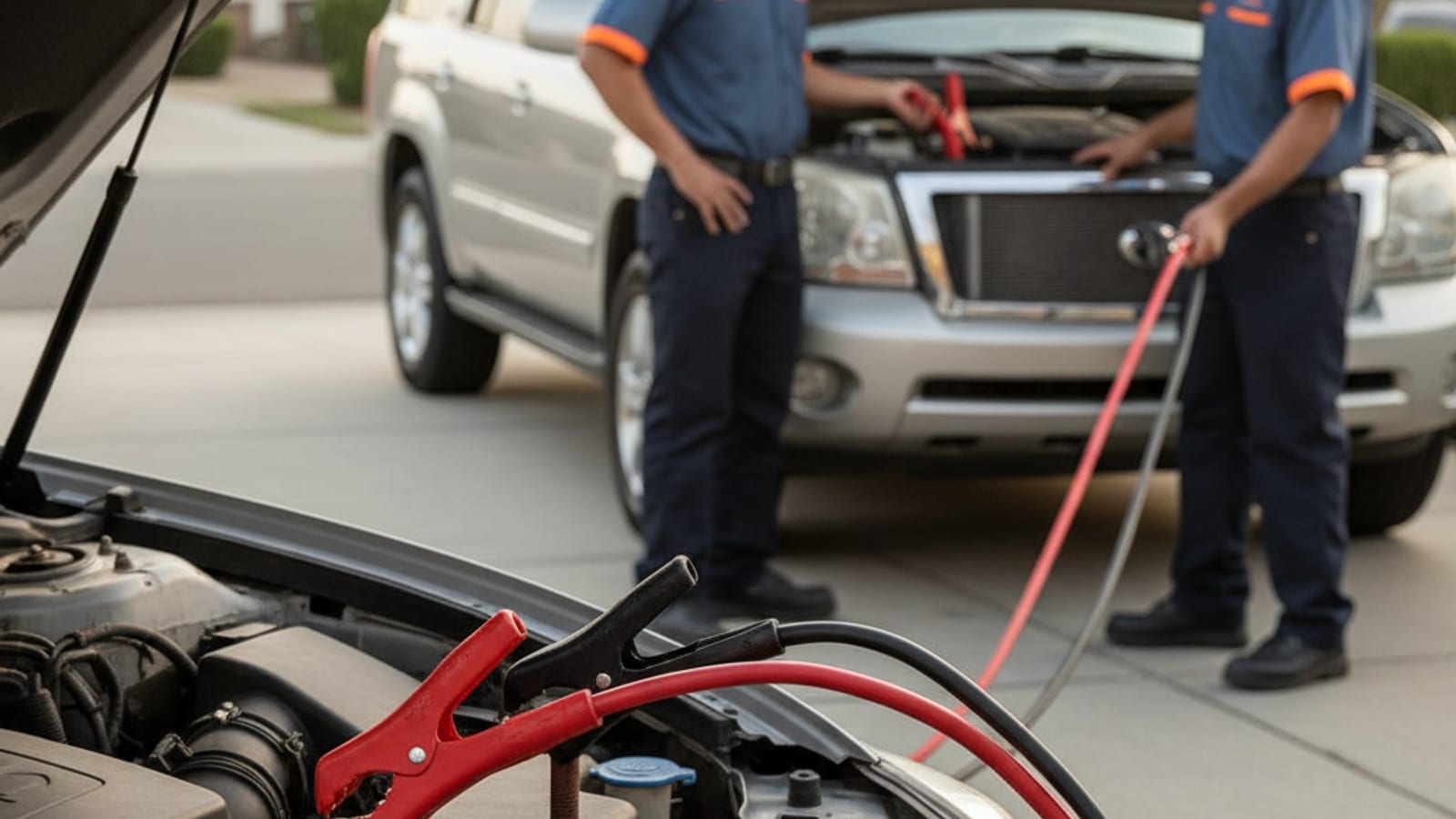
Jumper cables are simple until you hook them wrong. Do it right and you'll avoid sparks, ruined electronics, and a tow you didn't need.
What you'll learn
- The correct red-then-black clamp order (and why it matters)
- Why the last clamp goes on a bare metal point, not the dead battery
- When a jump-pack beats a cable-to-cable jump
- Signs that the alternator is bad and a jump will not fix the car
Step by step
- Pull the donor car close enough for the cables to reach. Both cars OFF.
- Clamp RED to POSITIVE (+) on the dead battery.
- Clamp RED to POSITIVE (+) on the donor battery.
- Clamp BLACK to NEGATIVE (−) on the donor battery.
- Clamp BLACK to bare metal on the dead car's engine block (not the battery).
- Start the donor. Wait 2 minutes. Start the dead car. Let run 10 minutes before driving.
If the car cranks weakly or dies again within an hour, the alternator or battery has failed. A second jump will not help - call for a tow to a shop.
Read what the car is telling you
The sound and dashboard response can narrow down the problem. These signs aren't a complete diagnosis, but they can help you decide whether another jump attempt makes sense.
- No crank and no dashboard lights: The battery may be fully discharged, or a battery connection may be loose or badly corroded. If the interior lights also stay dark, start with the battery and its connections.
- Fast clicking: The battery usually has enough power to engage the electrical system, but not enough to turn the engine. A jump may get the car started. If it doesn't, stop repeating the attempt.
- One loud click: A single solid click with normal dashboard lights can point toward the starter or its electrical connection. A jump may not solve it, especially when the lights remain bright.
- Cranks, starts, then dies: The battery may have received enough power to start the engine, but the charging system may not be keeping it running. Other faults can cause the same symptom, so the car may need diagnosis at a shop.
San Antonio heat can shorten battery life
San Antonio heat is hard on batteries even when the car seems normal. Local highs climb above 100F. In 2023, the city reached 105F with a 116F heat index. San Antonio's all-time high was 111F in 2000.
Heat speeds up battery wear. The failure often becomes obvious on the first cool morning, when the engine needs more starting power. That's why a battery can work through summer and suddenly produce clicking or dim lights when temperatures drop.
Cold can create its own problems. During February 2021, San Antonio stayed below 32F for 107 straight hours, and the freeze produced around 700 accidents. Both ends of the year can leave drivers facing a no-start, whether the battery was weakened by summer heat or strained by prolonged cold.
When a jump is the wrong call
Don't connect cables to a swollen, cracked, or leaking battery. Keep away from the battery and arrange a tow. A car that starts but won't hold a charge also needs more than repeated jumps. Continuing to restart it can leave you stranded again in a less safe place.
Hybrids and EVs often have a separate 12-volt system and a specified jump point. Use the location and procedure in the vehicle's manual. Don't guess based on where a battery appears to be. If the jump point or instructions aren't clear, have the vehicle moved by an operator familiar with that vehicle type.
A tow is also the right call when there isn't enough room to work safely. A parking lot or protected driveway is different from a narrow shoulder beside fast traffic.
Move yourself away from traffic
Texas Transportation Code 545.301 limits stopping on the main traveled part of a highway outside a business or residence district. Stopping there is allowed only when moving off the pavement is impractical, passage remains open, and the vehicle is visible for 200 feet in each direction. The fine runs from $50 to $200.
Don't attempt a jump in a live lane on I-35, I-10, I-37, Loop 410, Loop 1604, or US-281. Get yourself behind a barrier when you can do so safely, then call for help. Don't stand between vehicles or beside moving traffic to inspect the battery.
What to tell the dispatcher
Give the dispatcher your exact location, what the car does when you turn the key, and whether it's in a traffic lane, on a shoulder, or in a parking lot. Quick Tow San Antonio dispatches the call. A licensed local operator handles the work and quotes the job.
Rather have a pro handle it?
24/7 towing and roadside across the San Antonio metro, handled by licensed local operators.
Keep learning.
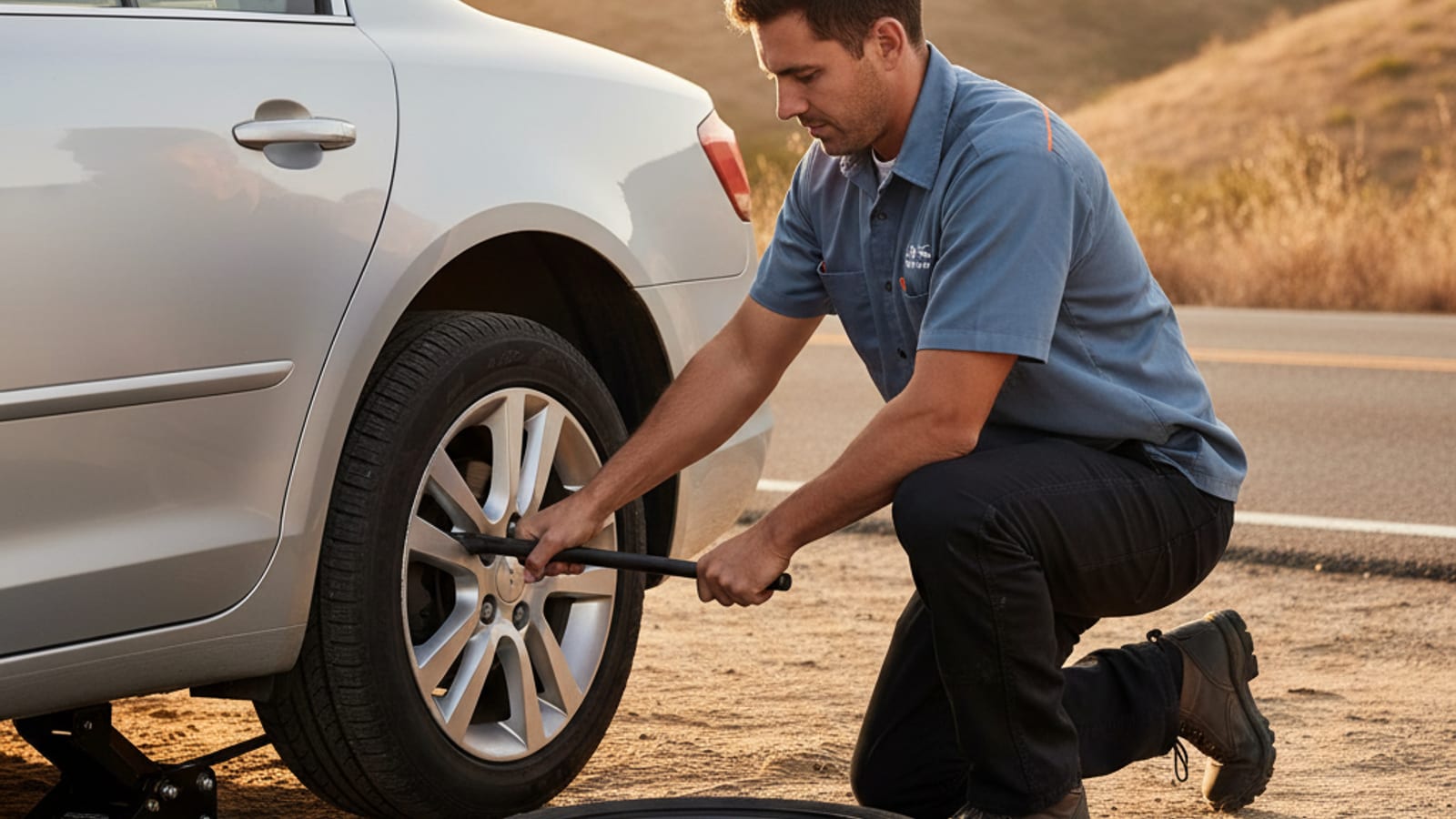
Change a flat tire on the side of the road
The difference between a 20-minute shoulder stop and an hour on the phone with a tow company is knowing where the spare and jack live before you need them.
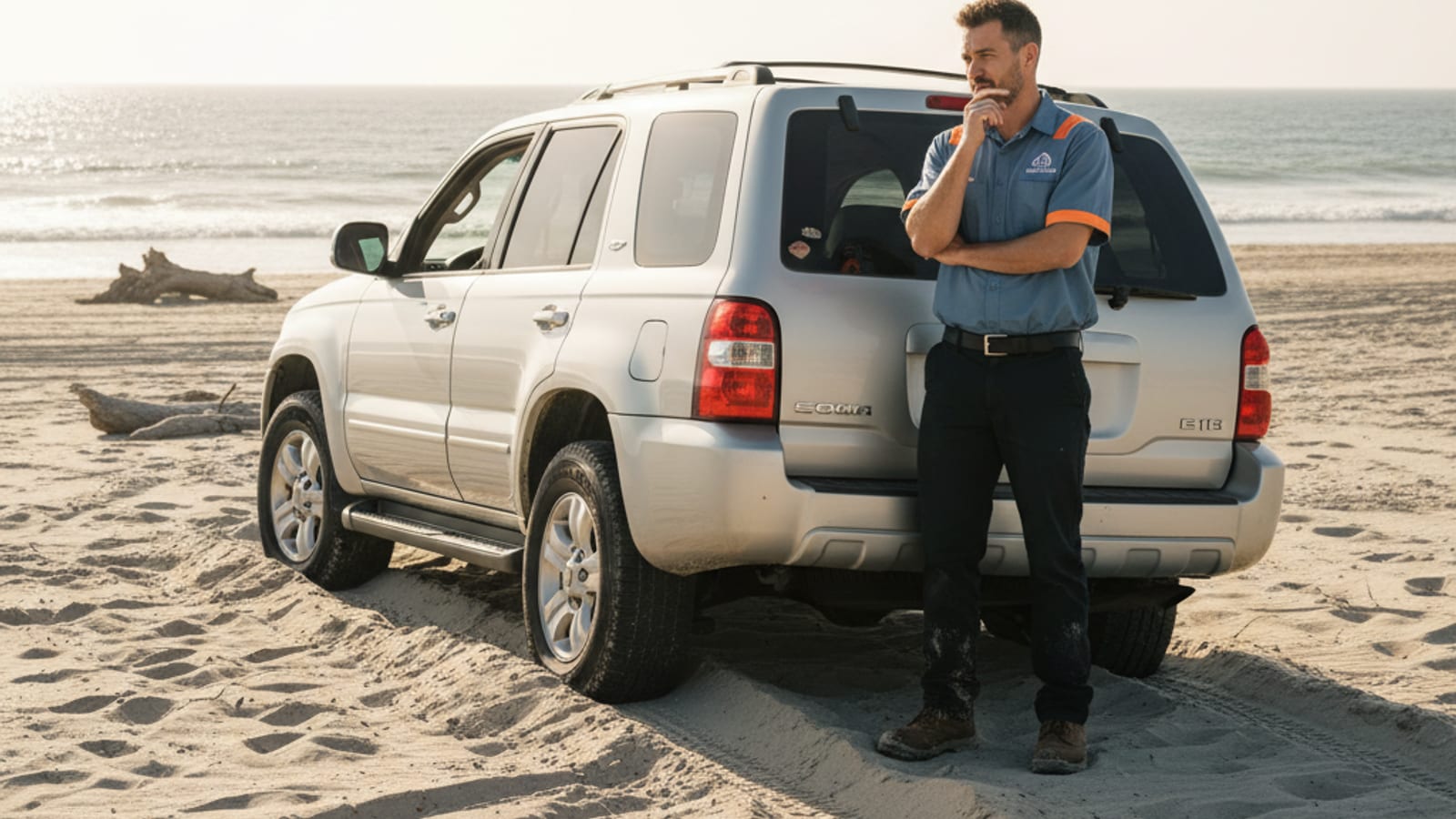
What to do when stuck in sand or mud
Stuck in sand or mud, the first move is to stop spinning the wheels, because every try after that digs the car deeper. San Antonio adds a second rule: if there is water across the road, nobody tries at all.
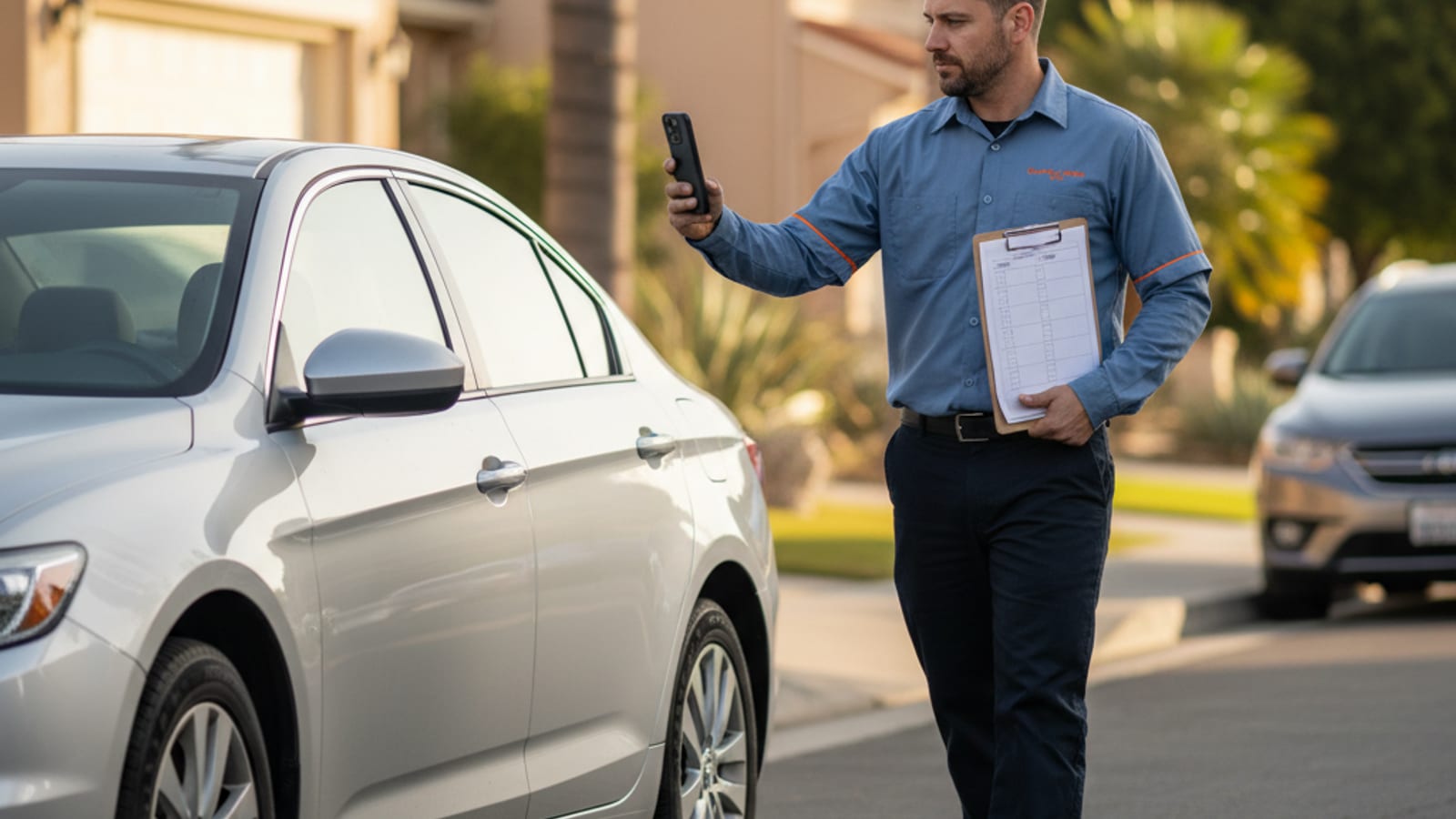
Prepare your vehicle for a tow
A few minutes of prep before the tow truck arrives saves time, avoids damage, and makes the whole call go faster.