What to do when stuck in sand or mud
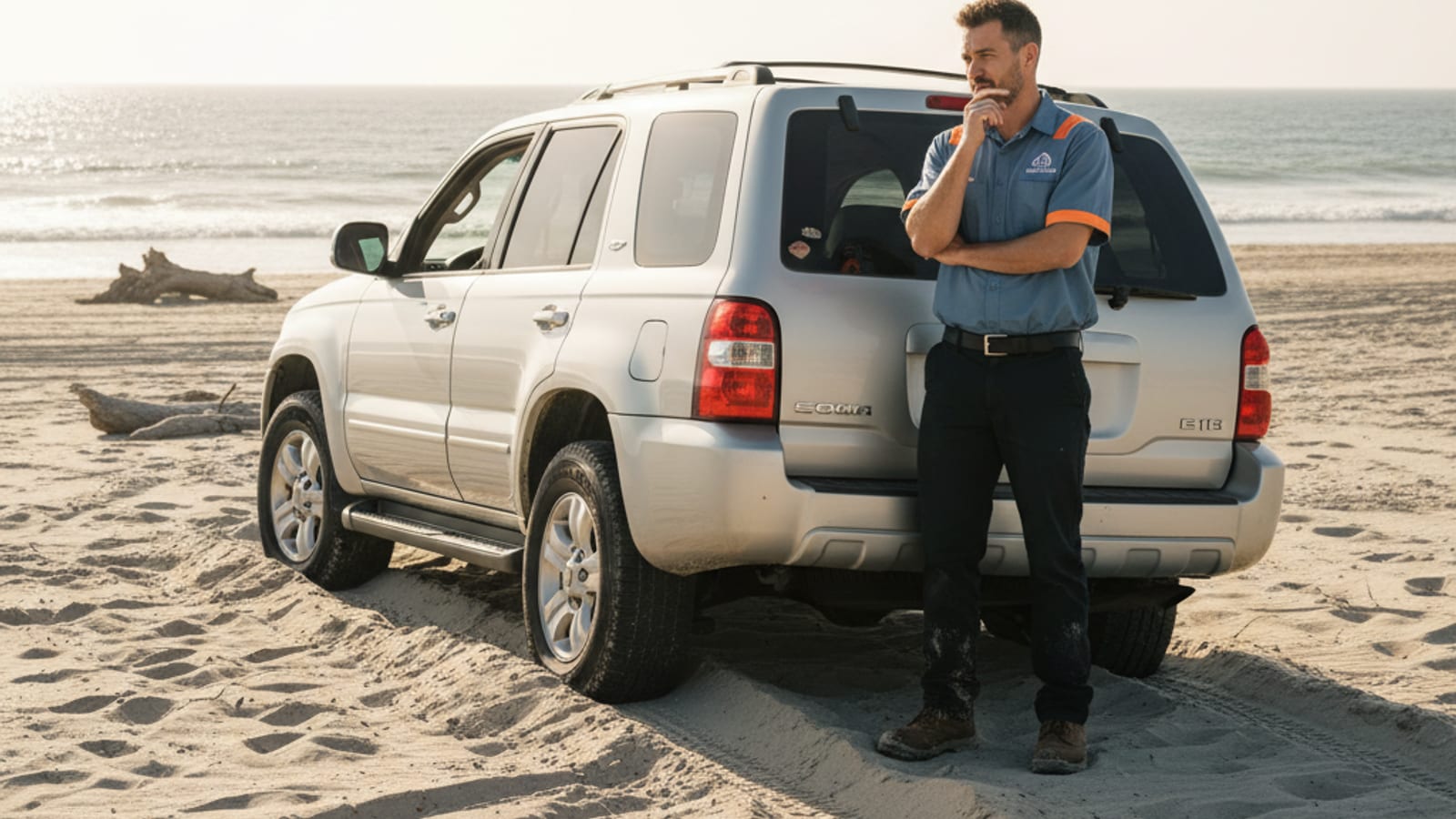
Stuck in sand or mud, the first move is to stop spinning the wheels, because every try after that digs the car deeper. San Antonio adds a second rule: if there is water across the road, nobody tries at all.
What you'll learn
- Why spinning the wheels digs you deeper - fast
- The airdown-and-drive-out move (safe only in certain conditions)
- How traction mats work and when to use them
- When to stop trying and call a winch-out
Step by step
- Stop spinning the wheels immediately. Spinning digs the tire down instead of moving the car forward.
- Check if anyone is hurt or if the vehicle is unstable (leaning, sinking). Step away if so.
- Dig the sand or mud away from the front and back of each drive wheel.
- Slide traction mats, cardboard, or floor mats under the drive wheels.
- Try to rock back-and-forth gently - reverse 6 inches, then forward 6 inches.
- If it does not move after 2 tries, stop. Call for a winch-out.
Out at a flooded low-water crossing or a Hill Country ranch road, a winch-out is far cheaper than a broken transfer case. Tell dispatch what the ground is and how deep the wheels are, so the operator sent carries the recovery gear the job needs.
When stuck in sand or mud needs a winch
Hill Country ranch roads and unpaved shoulders near the metro's edge can look firm from the cab. Mud may hide a soft base, while wet caliche can become slick and offer little grip.
A vehicle may be recoverable from a shoulder when the wheels remain near pavement, the body is level, and solid ground gives a recovery truck room to set up. It usually needs a winch line and a stable anchor point when the wheels are buried, the vehicle is farther from firm ground, or it's sitting on a slope or leaning.
All-wheel drive and four-wheel drive don't change that basic limit. If every tire has lost usable traction, more throttle can't create firm ground beneath them.
Moving water changes everything
Water is the one case where the answer is never "try again." San Antonio sits in Flash Flood Alley. In 2025, the area had its deadliest flood year since 1998, with 15 flood deaths and more than 70 water rescues in a single storm.
The documented danger zones include low-water crossings north of US-90 in the Salado Creek cluster. Bexar County runs 150 HALT sensor sites, but conditions can still change quickly at a crossing.
If water is moving across the road, nobody should wade in. Don't try to restart the engine. Don't wait inside the vehicle while it sits in a creek bed. Get everyone to high ground, then call for help. A vehicle that has been in moving water needs recovery by an operator with the right rig. It isn't a job for people to push from behind.
Why restarting a flooded engine can cause major damage
An engine may stall after drawing water into its air intake. That doesn't always mean the worst damage has already happened. The expensive mistake can occur when someone turns the key again.
Inside a running engine, pistons compress a mixture of air and fuel. Water doesn't compress the same way. If water fills a cylinder, the piston can't complete its normal movement. The force from a restart can bend or break internal engine parts. This condition is called hydrolock.
Leave the engine off after water reaches the intake or the vehicle stalls in floodwater. Tell the recovery operator what happened before the vehicle is moved or started.
What to tell the dispatcher
A winch-out dispatch depends on the vehicle's position and the surrounding ground. Before the truck rolls, share:
- How far the vehicle is from the pavement
- Whether the ground is sand, mud, water, or caliche
- How deeply the wheels are buried
- Whether the vehicle is on a slope or leaning
- Whether a recovery truck has room to set up behind it
Photos can help show the approach and the vehicle's angle. A dropped pin is more useful than a street name on ranch roads or remote shoulders. Include the nearest paved road or visible landmark when available.
How payment works
Quick Tow San Antonio takes the call and dispatches a licensed local operator. That operator quotes the recovery, and the driver pays the operator directly.
Rather have a pro handle it?
24/7 towing and roadside across the San Antonio metro, handled by licensed local operators.
Keep learning.
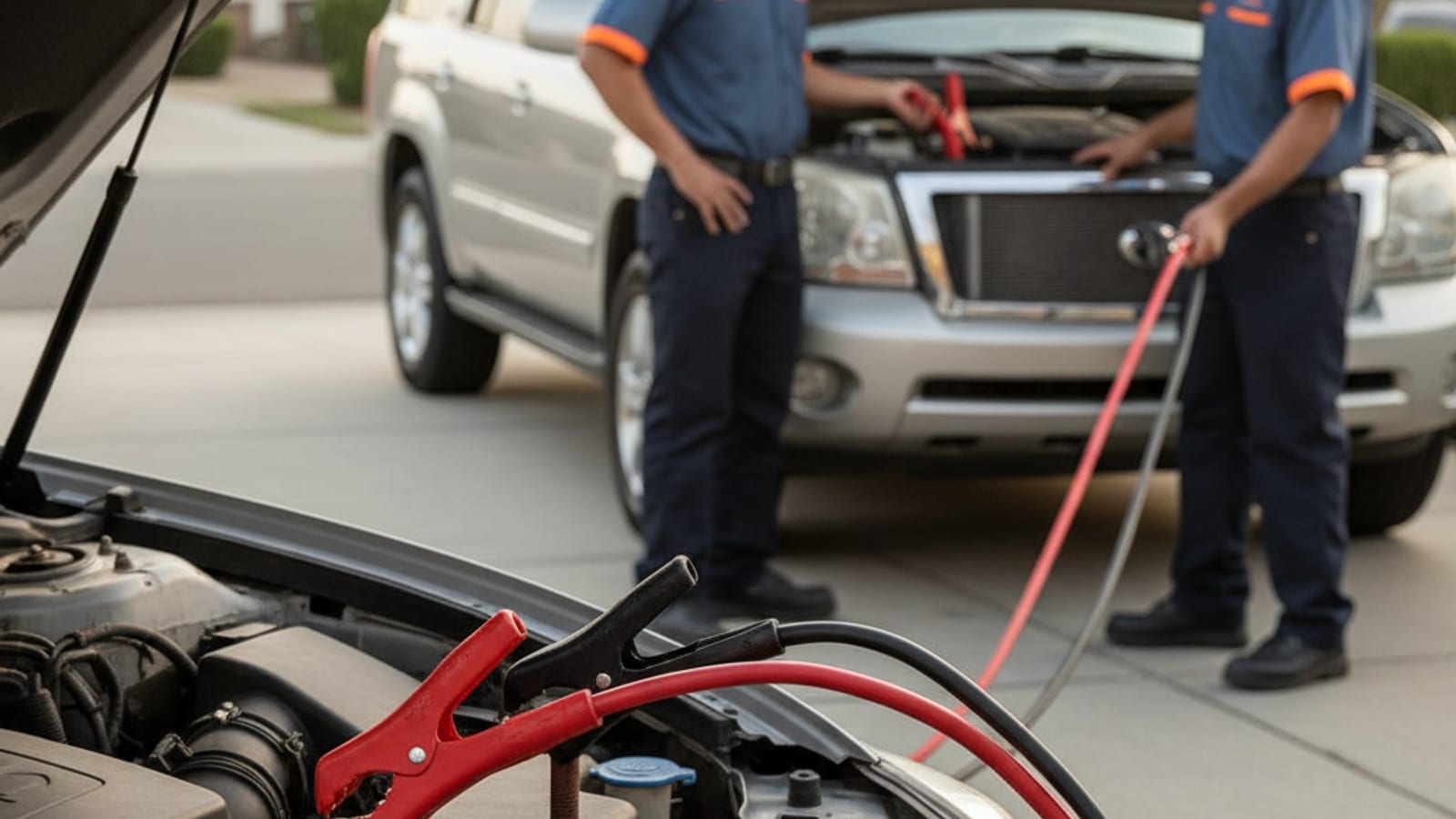
Jump-start a dead battery safely
Jumper cables are simple until you hook them wrong. Do it right and you'll avoid sparks, ruined electronics, and a tow you didn't need.
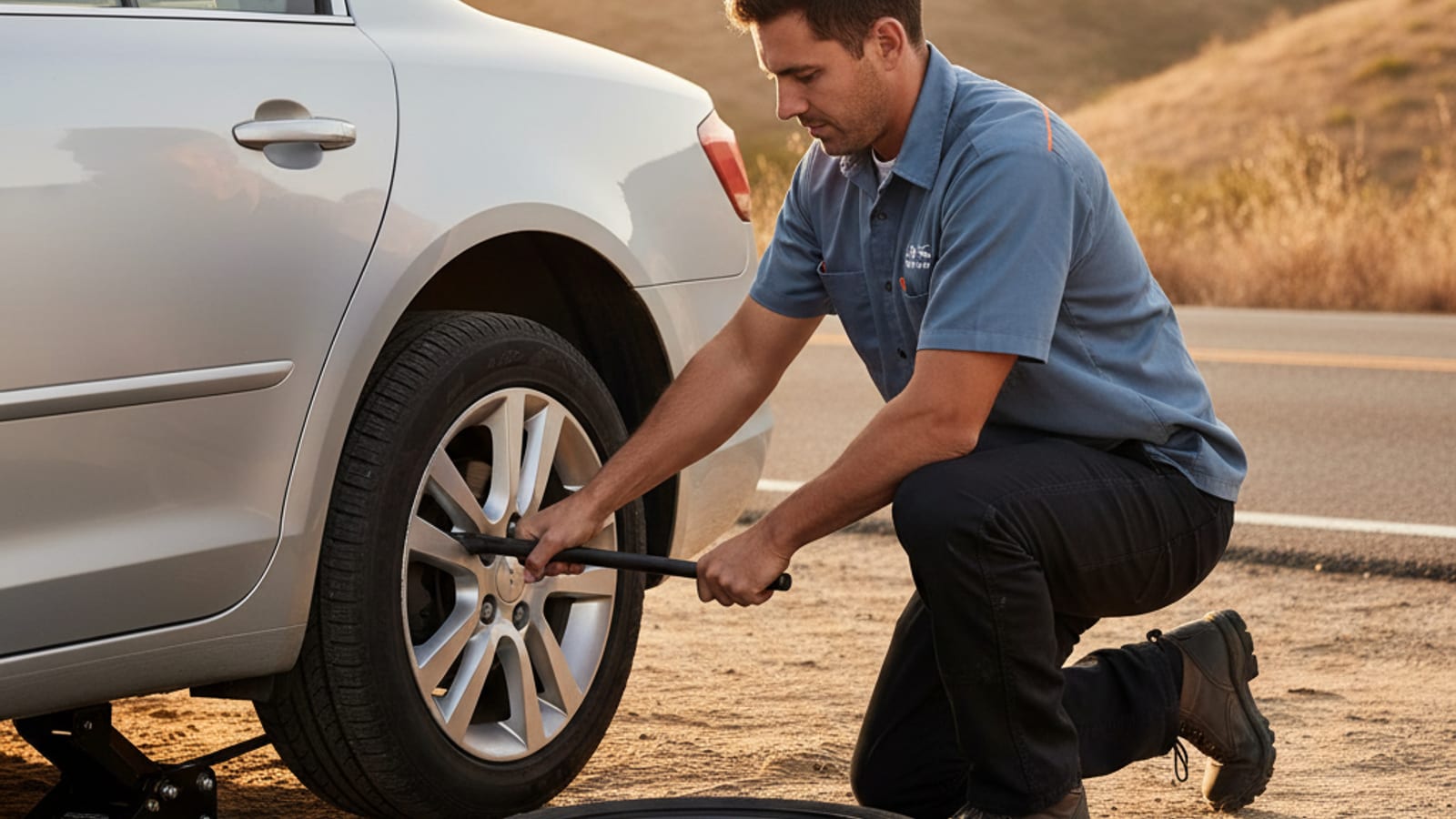
Change a flat tire on the side of the road
The difference between a 20-minute shoulder stop and an hour on the phone with a tow company is knowing where the spare and jack live before you need them.
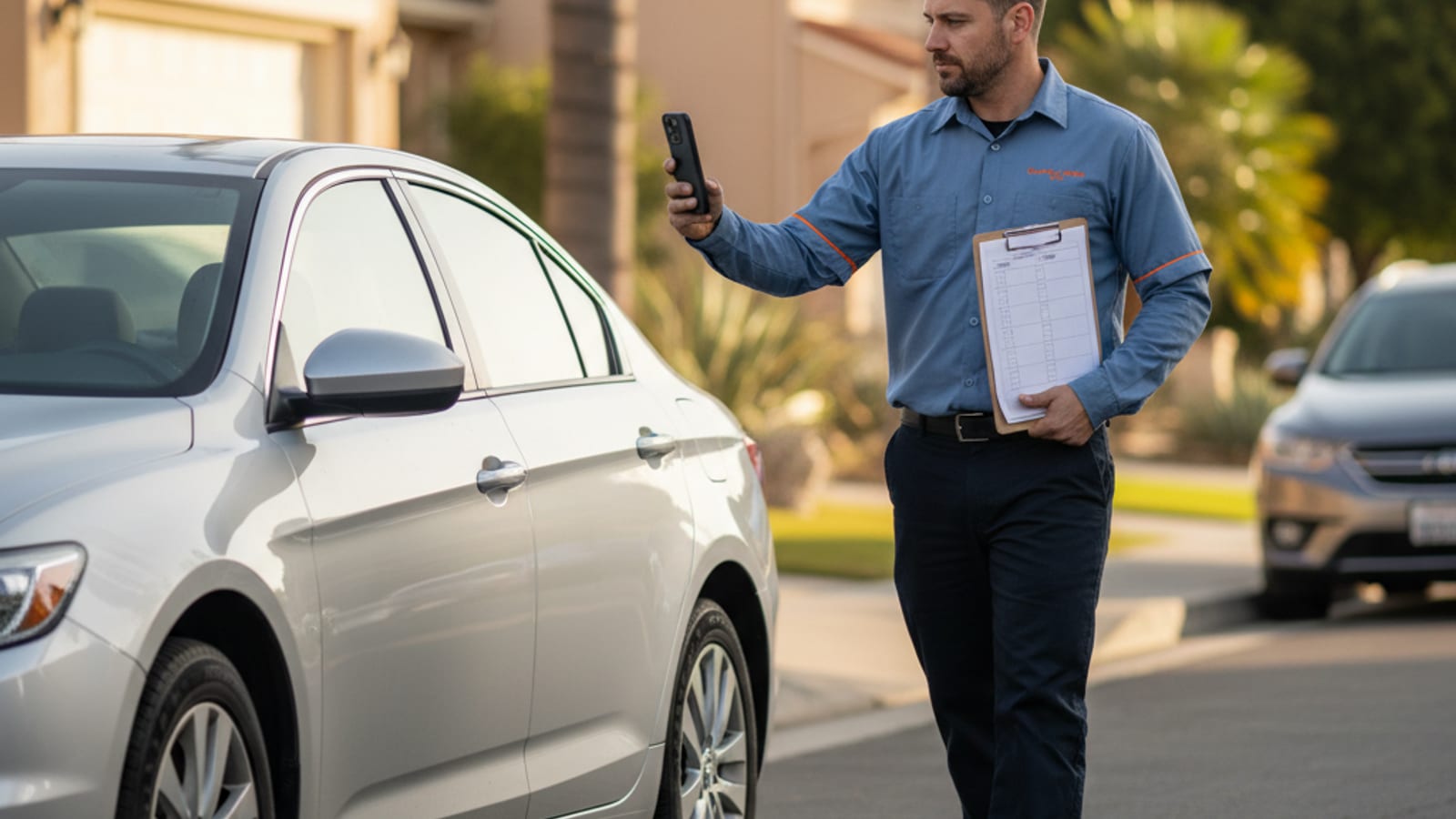
Prepare your vehicle for a tow
A few minutes of prep before the tow truck arrives saves time, avoids damage, and makes the whole call go faster.