Change a flat tire on the side of the road
The difference between a 20-minute shoulder stop and an hour on the phone with a tow company is knowing where the spare and jack live before you need them.
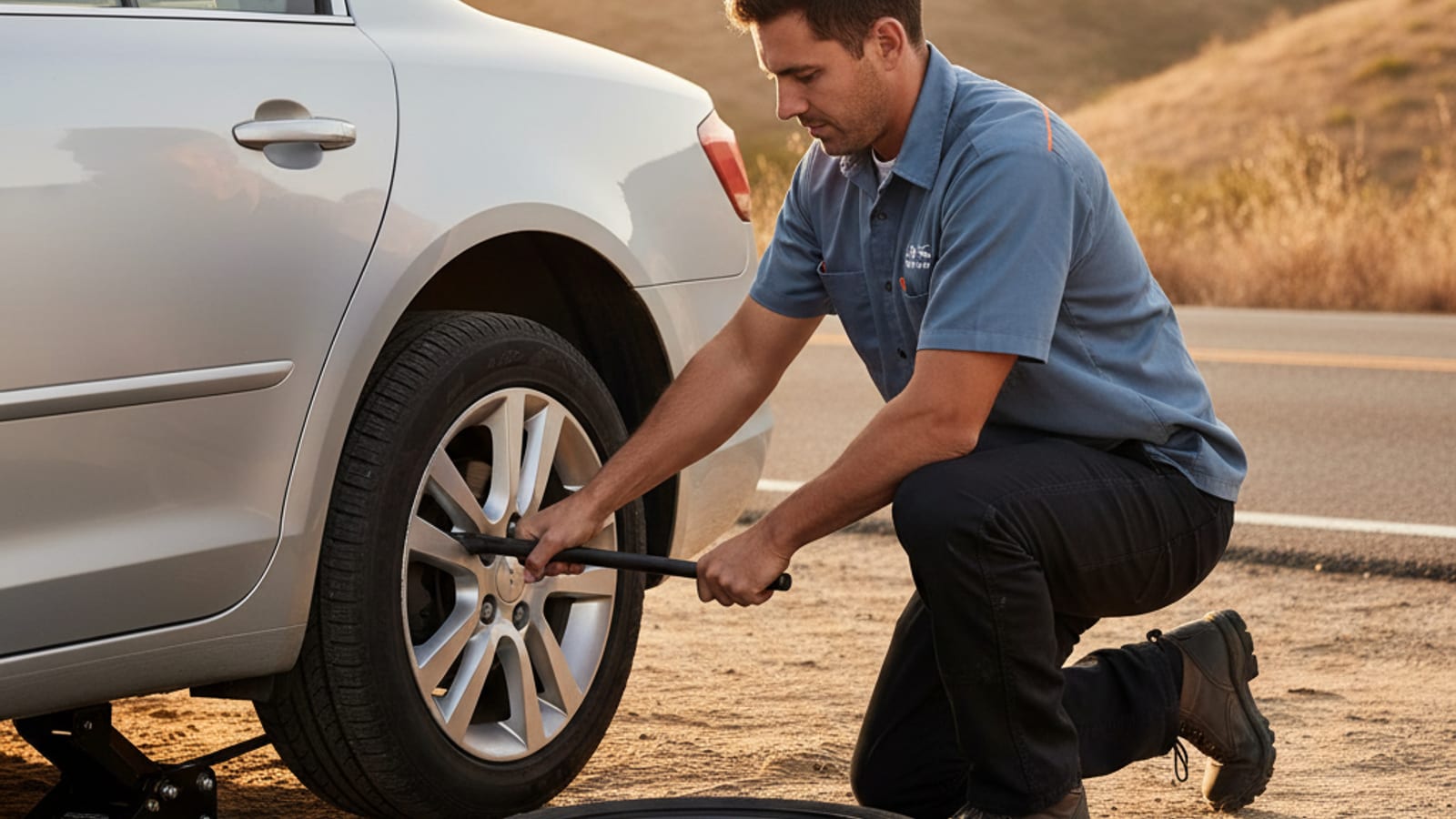
What you'll learn
- Why the traffic-side of a vehicle is the dangerous side for a DIY change
- Where the jack point is on most modern vehicles (check the owner's manual)
- The correct lug-nut loosening pattern (star/cross, not circle)
- When to call for a tow instead - freeway shoulders, curbs without room, or damaged sidewalls
Step by step
- Pull off into a safe flat spot - away from traffic, off a shoulder if possible.
- Set the parking brake. Turn on hazard lights. Put the transmission in park (or 1st gear on manual).
- Loosen the lug nuts half a turn each before jacking - while the tire is still on the ground.
- Position the jack at the factory jack point under the frame. Raise until the tire is 1-2 inches off the ground.
- Remove the lugs, swap the flat for the spare, hand-tighten lugs in a star pattern.
- Lower the car fully. Torque the lugs in the same star pattern.
- Drive directly to a tire shop. Most spares are rated for 50 mph max, 70 mile range.
If you are on the shoulder of I-35, I-37, or Loop 410, call for a tow to a safe lot. Tire changes on active freeway shoulders cause hundreds of secondary accidents every year.
When changing the tire isn't the right move
A spare won't solve every flat. Call for roadside help when the tire has a sidewall cut or bulge, or when a blowout has damaged the wheel. You'll also need another solution if two tires are flat or the replacement tire loses air again within minutes.
Check the trunk before assuming there's a spare. Many newer cars carry an inflator kit instead. That kit may help with some tread punctures, but it won't seal a damaged sidewall. Tell dispatch what you found so the licensed local operator can bring the right equipment.
Your location matters more than the tire
A flat in a parking lot is different from one beside moving traffic. Texas Transportation Code 545.301 limits stopping on the main traveled part of a highway outside a business or residence district. Stopping there is allowed only when getting off the pavement is impractical, passage remains open, and the vehicle is visible for 200 feet in both directions. The fine is $50 to $200.
Several San Antonio corridors leave little room for safe roadside work. These include the downtown I-35, I-10 and I-37 braid, Loop 410, and Loop 1604. Expansion work along Loop 1604 can shift lanes and change shoulder access.
US-281 between Loop 1604 and Stone Oak Parkway carries more than 91,000 vehicles daily. It's the city's most congested stretch. I-35 carries roughly 200,000 vehicles a day through the metro, and close to half of that traffic is trucks. If your car is exposed to those traffic streams, stay clear of moving lanes and request help.
San Antonio heat puts more stress on tires
San Antonio temperatures can climb above 100F. In 2023, the city reached 105F with a 116F heat index. The all-time high was 111F in 2000.
Hot pavement raises pressure inside an already underinflated tire. A worn tire can then let go under the added stress. Check tire pressure while the tires are cold, before driving. A reading taken after a trip reflects heat from the road and tire movement.
Non-consent towing limits inside San Antonio
If you didn't call for the tow, different rules apply. San Antonio City Code 19-402 caps a non-consent tow at $177 for a vehicle up to 10,000 pounds, $196 for 10,001 to 24,999 pounds, and $602 for 25,000 pounds and over.
The city also limits daily storage to $21.03 plus tax and the notification fee to $50. Dolly, mileage, and special-equipment charges aren't allowed. These figures are legal limits for non-consent towing, not prices quoted by Quick Tow San Antonio.
TDLR's statewide maximums are higher: $272, $380, and $489 per unit for the same weight groups. Inside San Antonio, the city's lower caps set the ceiling. A consent tow requested by you is quoted directly by the licensed local operator taking the job.
What to tell dispatch
Give dispatch your road, direction of travel, and nearest exit or cross street. Say which wheel is affected, whether you have a usable spare, and whether the car is in a traffic lane or fully off the pavement. Those details help the operator understand the vehicle's position and the equipment the job may require.
Rather have a pro handle it?
24/7 towing and roadside across the San Antonio metro, handled by licensed local operators.
Keep learning.
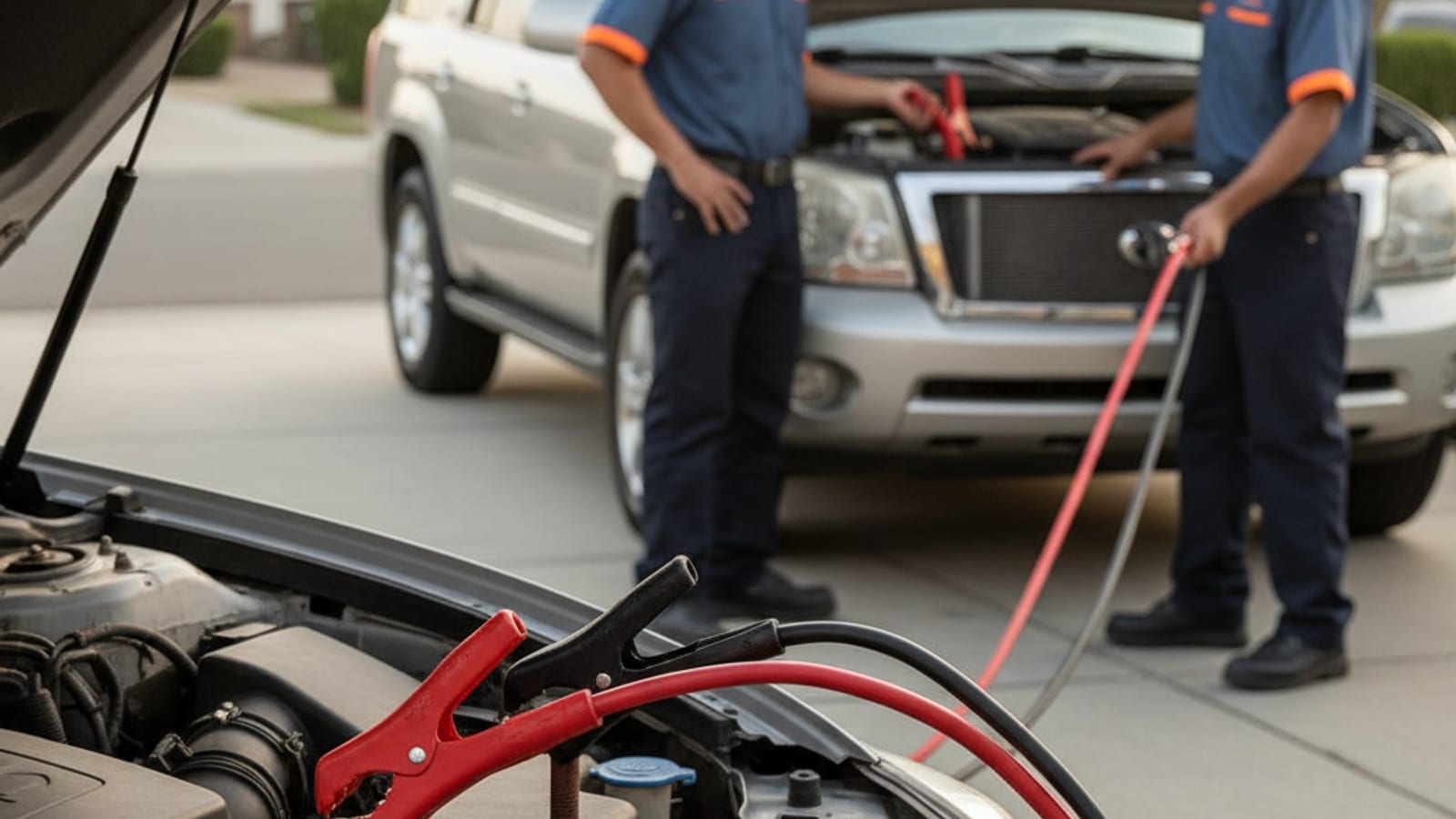
Jump-start a dead battery safely
Jumper cables are simple until you hook them wrong. Do it right and you'll avoid sparks, ruined electronics, and a tow you didn't need.
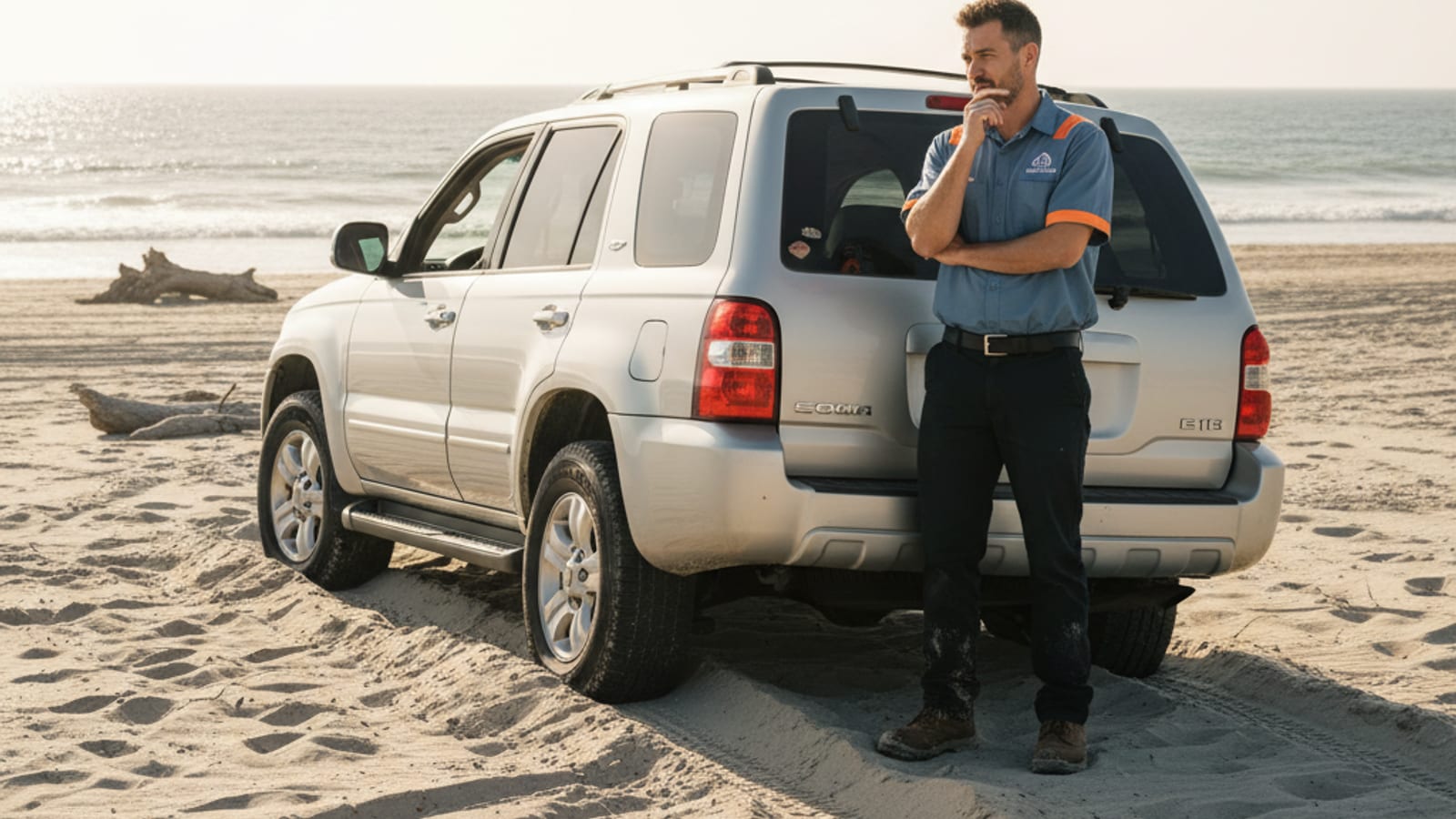
What to do when stuck in sand or mud
Stuck in sand or mud, the first move is to stop spinning the wheels, because every try after that digs the car deeper. San Antonio adds a second rule: if there is water across the road, nobody tries at all.
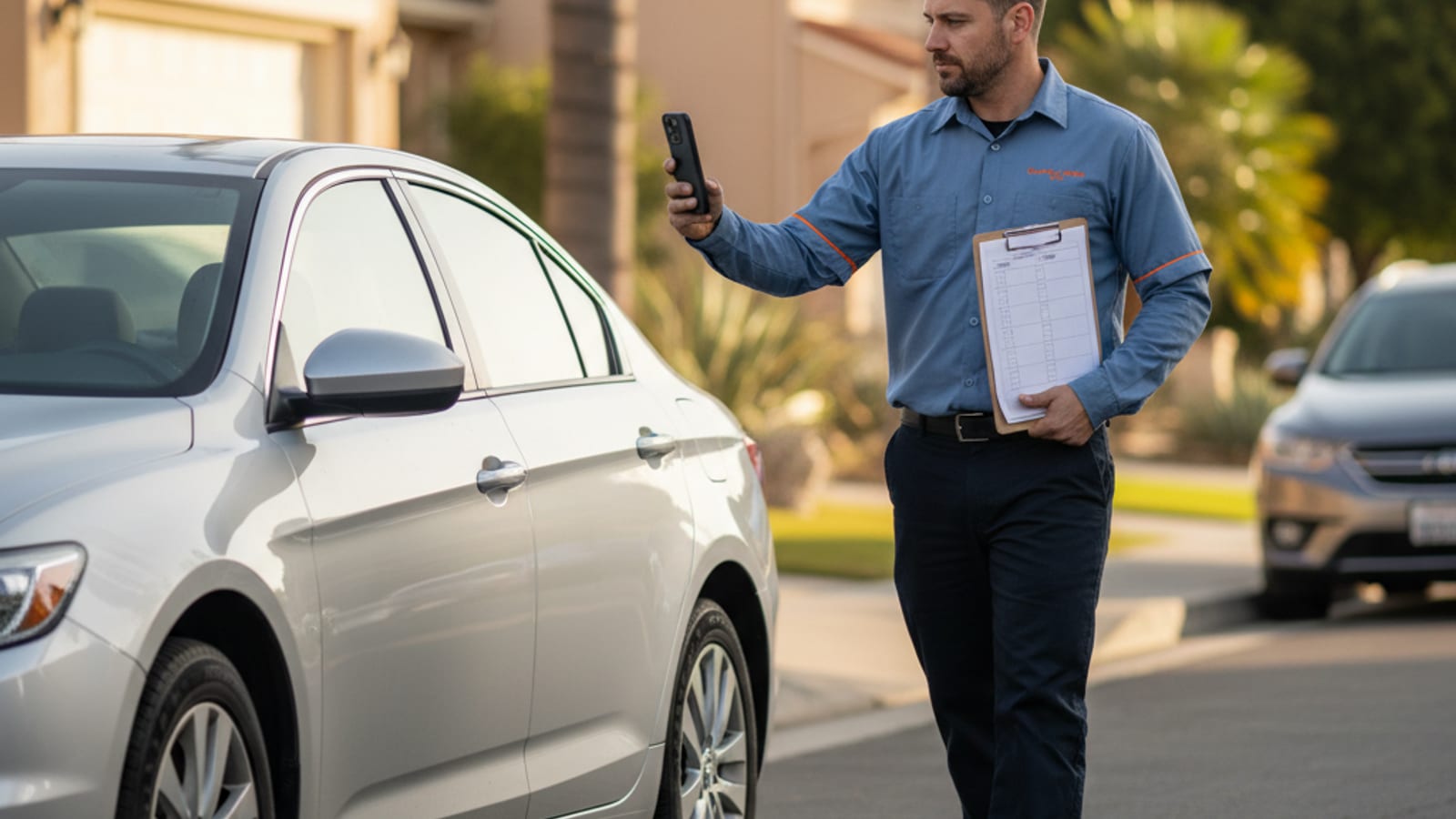
Prepare your vehicle for a tow
A few minutes of prep before the tow truck arrives saves time, avoids damage, and makes the whole call go faster.