Prepare your vehicle for a tow
A few minutes of prep before the tow truck arrives saves time, avoids damage, and makes the whole call go faster.
What you'll learn
- What to take out of the car before it goes on the flatbed
- Whether to disconnect the battery (usually no - but sometimes yes)
- Why photographing the vehicle beforehand protects you
- What transport mode is and when your EV needs it
Step by step
- Remove valuables, registration, and any loose items inside the cabin.
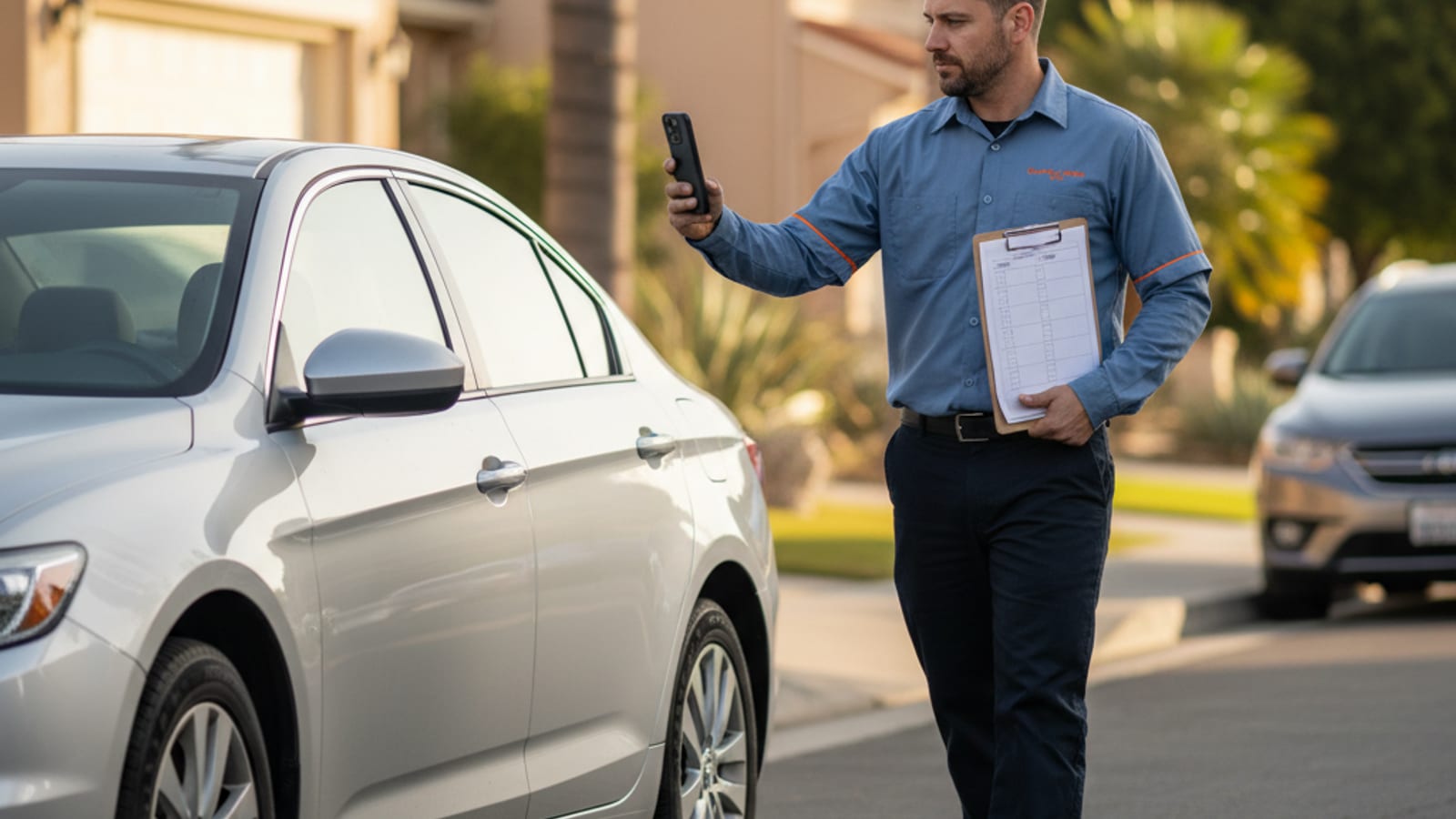
- Photograph all four sides of the car before loading. Save the photos.
- If the car has an alarm, turn it off or disable motion sensing.
- For EVs: engage transport mode per your owner's manual.
- Note any pre-existing damage and point it out to the driver.
- Leave fuel in the tank unless the driver tells you otherwise.
Photos before the tow protect both you and the driver. Operators photograph the load as standard procedure, and your own photos back up the story.
Know which truck is coming
The key question is simple: which wheels drive your car? A wheel-lift leaves two wheels rolling on the road, so the driven wheels need to be raised. All-wheel-drive vehicles and most modern automatics belong on a flatbed. For the fuller breakdown, see our flatbed versus wheel-lift comparison.
Have the details ready
Keep your ID and the vehicle key in your hand when the operator arrives. You'll also need the exact destination, including the shop's name and street address. Saying "a shop near the Medical Center" isn't enough for a clear tow ticket.
Be ready to identify who's authorizing the job. If the car is leased, financed, or owned by a company, settle that question before the winch comes out. The operator may need authorization from someone other than the person standing beside the vehicle.
Handle the paperwork before loading
You're contracting with the licensed operator who arrives, not with a dispatcher. Get the quote before the vehicle is loaded. Confirm that the tow ticket shows the correct shop and address, then keep your copy of the ticket.
If you discuss the job by phone, Texas Penal Code 16.02 allows a party to that call to record it. Texas is a one-party-consent state. The line plays a recording notice at the start of the call.
Before loading begins, make sure the operator and destination match what you authorized. If anything on the ticket differs from the phone conversation, ask for the correction while the car is still in place.
If you didn't request the tow
A non-consent tow follows different rules. San Antonio City Code 19-402 caps the tow charge at $177 for vehicles up to 10,000 pounds, $196 for vehicles from 10,001 through 24,999 pounds, and $602 for vehicles weighing 25,000 pounds or more.
The same city provision sets daily storage at $21.03 plus tax and permits a $50 notification fee. It doesn't permit separate dolly, mileage, or special-equipment charges. These are city limits for non-consent towing, not prices for a tow you schedule yourself.
Finding a police-impounded vehicle
Police impounds go to the City of San Antonio Vehicle Impound Facility at 3625 Growdon Road, San Antonio, TX 78227. Call (210) 881-8440, or search for the vehicle at search.autoreturn.com. SAPD non-emergency is (210) 207-7273.
San Antonio's website lists the facility as open 24 hours. Confirm the current hours by phone before leaving, especially if you're traveling across the metro or arranging for someone else to collect the car.
What you'll need for release
Under San Antonio City Code 19-54, the claimant needs the title or other satisfactory proof of ownership and must pay the tow and storage charges. A representative needs the title plus a notarized authorization from the owner. Call the facility before your trip to confirm what it will accept as satisfactory proof and which payment method you should bring.
Scheduling a non-emergency tow
Tell dispatch the year, make, model, drive type, current location, exact destination, and whether the vehicle rolls, steers, or has damaged wheels. Mention low clearance, restricted garage access, or unusual vehicle size. Those details help the operator send the right truck the first time.
Rather have a pro handle it?
24/7 towing and roadside across the San Antonio metro, handled by licensed local operators.
Keep learning.
Jump-start a dead battery safely
Jumper cables are simple until you hook them wrong. Do it right and you'll avoid sparks, ruined electronics, and a tow you didn't need.
Change a flat tire on the side of the road
The difference between a 20-minute shoulder stop and an hour on the phone with a tow company is knowing where the spare and jack live before you need them.
What to do when stuck in sand or mud
Stuck in sand or mud, the first move is to stop spinning the wheels, because every try after that digs the car deeper. San Antonio adds a second rule: if there is water across the road, nobody tries at all.